Deadline looms for mobile network operators to implement their zero-rating obligations


South Africa's major mobile network operators have until January 15 next year to make the digital content of public benefit organisations (PBOs) data-free – or zero-rated – for users.
This forms part of legal obligations attached to the multibillion-rand spectrum auction, with expected revenues foregone factored into the bid prices by the network operators, held by the Independent Communications Authority of South Africa (Icasa) in 2022.
However, Icasa has yet to indicate how it intends to hold operators accountable, said DG Murray Trust (DGMT) CEO David Harrison in a statement.
Almost every home in South Africa has a mobile phone, but many in poor communities cannot afford the cost of data.
“This means the tools for stimulating socioeconomic change are out of reach for millions of people in a country where barriers to connectivity and access to information and resources are a systemic choke which reinforces inequality,” Harrison explained.
The zero-rating of digital content is a bridge across the digital divide that could connect people to information for education, social services, healthcare and job seeking.
“When content that carries social value is zero-rated, new mothers can access trusted information about breastfeeding and nutrition, preschool teachers can tap into support networks and receive training, and young people can be linked to work opportunities,” he continued.
While some mobile network operators have zero-rated at least two dozen organisations, only 15 organisations have been zero-rated out of thousands that may be eligible, across the major operators.
“We are deeply concerned that with the deadline just months away, we have had no meaningful communication from most mobile network operators, or from Icasa, about how zero-rating will be implemented, regulated and enforced,” added DGMT innovation director Busisiwe Kabane-Bailey.
Zero-rating is not new to mobile network operators: they were required to zero-rate educational and Covid-related health content of websites under the Covid-19 national disaster regulations.
In the years before the pandemic, and since, some operators have zero-rated sites of their own accord; however, implementation was uneven. For example, a site that is data-free on one network may not be on another, or may carry different speed and data limitations.
Further, the content itself was selected at each operator's discretion, with no shared standard to ensure it delivered the greatest possible educational or health benefit.
“The question is not whether operators can do this but why they have not. When zero-rating was required under the Covid-19 disaster regulations, networks implemented it,” Kabane-Bailey pointed out.
DGMT started exploring ways to reduce data costs and expand access to public-benefit content as early as 2013.
To streamline implementation, DGMT operates the Social Innovation Register (SIR), which is designed to review PBO applications by verifying their tax-benefit status according to Schedule 9 of the Income Tax Act and confirming they meet the technical requirements for zero-rating.
The SIR acts as a single source of information for PBOs that have been assessed against the eligibility criteria for zero-rating and aims to reduce the need for mobile network providers to evaluate applications independently. While the SIR itself was only launched in 2023, it is the product of more than a decade of work in this area.
“Since going live, the SIR has processed more than 120 applications, demonstrating that much of the infrastructure needed to drive implementation at scale is already in place. What is missing is engagement,” said Kabane-Bailey.
“Zero-rating offers operators a chance to restore trust and to accelerate socioeconomic development, at modest cost, with the systems already built. We are calling on operators to use the existing systems to fast-track zero-rating before the deadline expires, and to urgently publish their implementation plans,” she concluded.
Article Enquiry
Email Article
Save Article
Feedback
To advertise email advertising@creamermedia.co.za or click here
Projects

Latest Multimedia

Latest News


Showroom
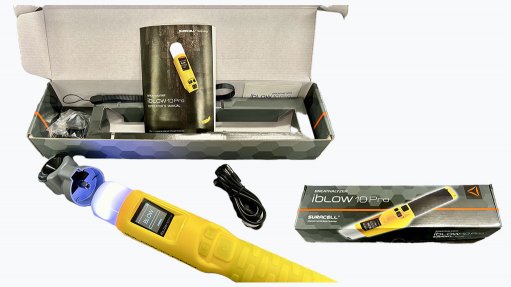
Supplier & Distributor of the Widest Range of Accurate & Easy-to-Use Alcohol Breathalysers
VISIT SHOWROOM
Established in 1933, EKATO is the world leader in agitation technology, supplying agitators for processes and applications such as chemicals and...
VISIT SHOWROOM


Press Office
Announcements
What's On
Subscribe to improve your user experience...
Option 1 (equivalent of R125 a month):
Receive a weekly copy of Creamer Media's Engineering News & Mining Weekly magazine
(print copy for those in South Africa and e-magazine for those outside of South Africa)
Receive daily email newsletters
Access to full search results
Access archive of magazine back copies
Access to Projects in Progress
Access to ONE Research Report of your choice in PDF format
Option 2 (equivalent of R375 a month):
All benefits from Option 1
PLUS
Access to Creamer Media's Research Channel Africa for ALL Research Reports, in PDF format, on various industrial and mining sectors
including Electricity; Water; Energy Transition; Hydrogen; Roads, Rail and Ports; Coal; Gold; Platinum; Battery Metals; etc.
Already a subscriber?
Forgotten your password?
Receive weekly copy of Creamer Media's Engineering News & Mining Weekly magazine (print copy for those in South Africa and e-magazine for those outside of South Africa)
➕
Recieve daily email newsletters
➕
Access to full search results
➕
Access archive of magazine back copies
➕
Access to Projects in Progress
➕
Access to ONE Research Report of your choice in PDF format
RESEARCH CHANNEL AFRICA
R4500 (equivalent of R375 a month)
SUBSCRIBEAll benefits from Option 1
➕
Access to Creamer Media's Research Channel Africa for ALL Research Reports on various industrial and mining sectors, in PDF format, including on:
Electricity
➕
Water
➕
Energy Transition
➕
Hydrogen
➕
Roads, Rail and Ports
➕
Coal
➕
Gold
➕
Platinum
➕
Battery Metals
➕
etc.
Receive all benefits from Option 1 or Option 2 delivered to numerous people at your company
➕
Multiple User names and Passwords for simultaneous log-ins
➕
Intranet integration access to all in your organisation